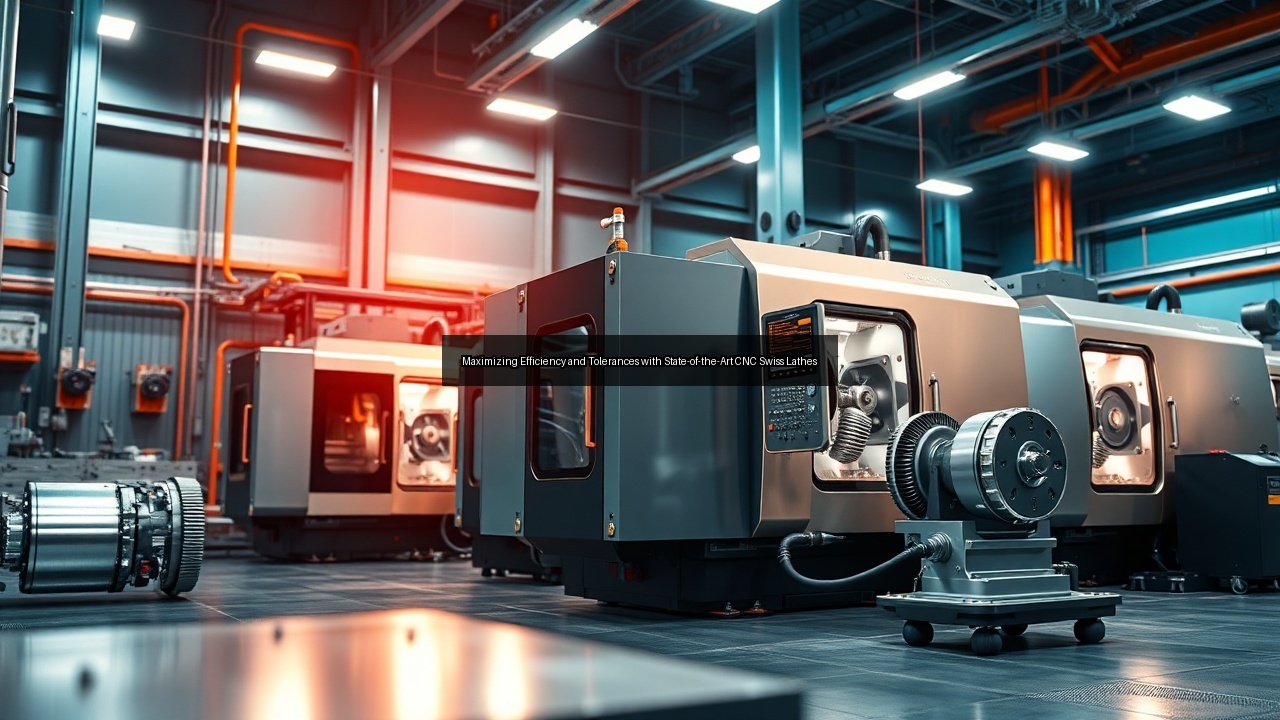
Maximizing Efficiency and Tolerances with State-of-the-Art CNC Swiss Lathes
Understanding CNC Swiss Lathes and Their Applications
What is a CNC Swiss Lathe?
CNC Swiss lathes support the workpiece with a guide bushing positioned directly at the cutting zone. This design minimizes deflection during machining and delivers superior accuracy on long, slender parts. Operators feed bar stock through the machine while tools perform operations in multiple axes simultaneously. Swiss screw machining evolved from traditional cam-operated screw machines into fully programmable CNC versions that handle complex sequences without manual intervention. Manufacturers turn to cnc swiss lathe machining services when they need repeatable results on diameters under 1.25 inches. The lathe maintains constant support, which reduces vibration and enables tighter control over surface finishes. Modern controls allow quick program changes that shorten setup times between jobs. American shops integrate these lathes into production cells that run unattended for extended periods, boosting overall output.
Key Features of CNC Swiss Lathes
Swiss lathes incorporate live tooling, C-axis control, and sub-spindles that complete parts in a single setup. The guide bushing maintains rigidity while the headstock slides along the Z-axis, feeding material past stationary tools. This configuration supports high-speed drilling, milling, and threading without secondary operations. CNC swiss lathes also feature automatic bar feeders that maintain continuous operation across multiple shifts. Precision scales and servo motors track positions to within microns, which protects tight tolerances on critical dimensions. Tool holders positioned around the guide bushing allow simultaneous cuts that compress cycle times. Coolant systems deliver high-pressure fluid directly to the cutting edge, extending tool life during heavy material removal. These features combine to make swiss lathe machining services ideal for parts that demand both speed and accuracy.
Common Applications in Various Industries
Medical device companies order bone screws, surgical handles, and implant components through cnc swiss lathe machining services because the process holds concentricity across multiple diameters. Aerospace contractors machine valve stems, sensor housings, and hydraulic fittings that must survive extreme pressures and temperatures. Automotive suppliers produce fuel injector nozzles and transmission pins where volume requirements reach tens of thousands of pieces per month. Electronics firms request connector pins and miniature shafts that require precise threading and knurling. Watch manufacturers rely on swiss lathes for tiny gear arbors and balance staffs finished to optical standards. Firearm producers create firing pins and extractors that demand consistent screw machined quality. Each industry benefits from the ability to machine complex geometries from difficult materials such as titanium, stainless steel, and high-performance plastics.
The Advantages of CNC Swiss Lathe Machining Services
Precision and Tolerances in Machining
Swiss lathes routinely achieve tolerances of ±0.0002 inches on diameter and ±0.0005 inches on length because the guide bushing eliminates whip and chatter. Operators monitor tool wear with in-process probing that automatically compensates offsets before dimensions drift. Threading operations maintain pitch diameter control through synchronized spindle and tool movements. Screw machining on these platforms produces consistent results across long production runs without operator intervention. Machinists verify surface finishes below 16 microinches using non-contact measurement systems integrated into the workflow. The combination of rigid construction and advanced controls lets manufacturers hold true position on hole patterns that would challenge conventional lathes. This level of precision reduces scrap rates and eliminates costly rework that erodes margins on high-value components.
Efficiency in High-Volume Production
High-volume runs benefit from simultaneous machining at multiple stations, which shortens cycle times dramatically compared with standard CNC lathes. Bar feeders supply material continuously, allowing machines to operate through breaks and shift changes. Swiss screw machining cells often achieve 85 percent or higher utilization when paired with proper scheduling software. Tool life extends because each insert performs only its designated operation rather than multiple tasks. Quick-change tool holders reduce downtime during insert replacements to under five minutes. Volume production therefore scales efficiently without proportional increases in labor or floor space. Shops track overall equipment effectiveness daily to identify bottlenecks before they affect delivery commitments.
Complex Geometries and Design Flexibility
Designers specify undercuts, cross-holes, and eccentric features knowing that swiss lathes can produce them without refixturing. Live tooling performs milling and drilling perpendicular to the main axis while the part remains supported. Sub-spindles transfer the workpiece for back-side operations that complete the part in one cycle. Threading, broaching, and polygon turning occur at the same station, eliminating secondary equipment. Engineers iterate part designs rapidly because program changes require only minutes rather than hours of tooling modifications. Swiss lathe machining services therefore accommodate both prototype quantities and full production without process redesign. This flexibility supports product development teams that must validate multiple iterations before market launch.
Quality Management in CNC Swiss Machining
Implementing a Quality Management System
Effective quality management systems document every process parameter from raw material certification through final inspection. Operators follow standardized work instructions that specify tool offsets, coolant concentrations, and inspection frequencies. Statistical process control charts track critical dimensions in real time and trigger corrective action when trends appear. Calibration records for gauges and probes remain accessible for audits. Nonconforming material receives immediate quarantine and root-cause analysis that feeds into continuous improvement projects. Training records confirm that every machinist understands both the operation and the quality checkpoints. These procedures create a closed-loop system that prevents defects rather than detecting them after production.
Meeting Aerospace Standards
Aerospace customers demand compliance with AS9100 and NADCAP requirements that cover material traceability, process validation, and first-article inspection. Swiss lathes produce flight-critical fasteners and fittings that undergo 100 percent dimensional verification plus material lot testing. Shops maintain detailed process failure mode and effects analyses that identify potential risks before parts reach assembly. Heat lot tracking follows every bar through machining, heat treat, and plating. First-article reports include ballooned drawings and actual measurement data recorded on calibrated equipment. These controls satisfy stringent customer audits and secure long-term contracts for precision screw machined components.
Ensuring Consistent Screw Machined Quality
Consistent screw machined quality depends on disciplined tool management and preventive maintenance schedules. Shops replace worn bushings and collets before they affect runout. Daily checks verify coolant concentration and filter condition to protect surface integrity. In-process sampling plans call for checks at the start of each shift and after every tool change. Data logs capture machine parameters that correlate with dimensional stability. When variations occur, teams isolate the cause—whether tool deflection, material inconsistency, or program error—before resuming production. This disciplined approach delivers parts that meet print specifications on every order.
Optimizing Production with CNC Swiss Lathes

Just-In-Time (JIT) Manufacturing Benefits
JIT manufacturing aligns production with actual demand and reduces inventory carrying costs. Swiss lathes support short lead times because setups require little custom tooling beyond standard inserts and collets. Kanban signals trigger replenishment only when bins reach minimum levels. Cellular layouts place inspection and packaging steps immediately after the lathe, eliminating transport delays. Reduced lot sizes decrease the risk of obsolete stock when designs change. Manufacturers that adopt JIT practices often cut lead times from weeks to days while maintaining high on-time delivery rates. Swiss lathe machining services therefore fit naturally into lean production systems that emphasize flow and pull.
Tool Selection and Setup for Efficiency
Proper tool selection balances cutting parameters with expected tool life to minimize interruptions. Carbide inserts with advanced coatings handle stainless and titanium at higher speeds than uncoated grades. Preset tool holders allow offline measurement that reduces machine downtime during changeovers. Shops standardize on common shank sizes and insert geometries to simplify inventory. Setup sheets list exact offsets, speeds, and feeds for each part number so operators avoid trial cuts. Quick-change systems lock tools into position within seconds. These practices compress setup time and raise overall efficiency across mixed-model production schedules.
Lead Times and Production Schedules
Accurate lead time estimates begin with realistic cycle time calculations that include tool changes and in-process inspections. Scheduling software sequences jobs to maximize bar stock utilization and minimize material waste. Priority rules favor rush orders while protecting existing commitments. Daily production meetings review machine status and adjust plans when unplanned downtime occurs. Customers receive updated delivery projections based on actual progress rather than optimistic assumptions. Swiss lathes running in optimized cells consistently meet aggressive lead times because the process itself is stable and predictable. This reliability strengthens supplier relationships and supports repeat business in competitive markets.